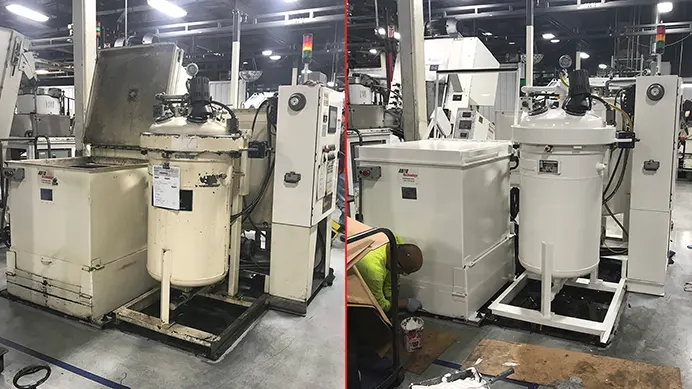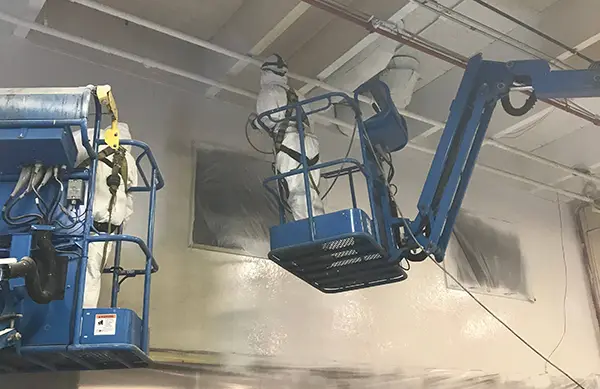
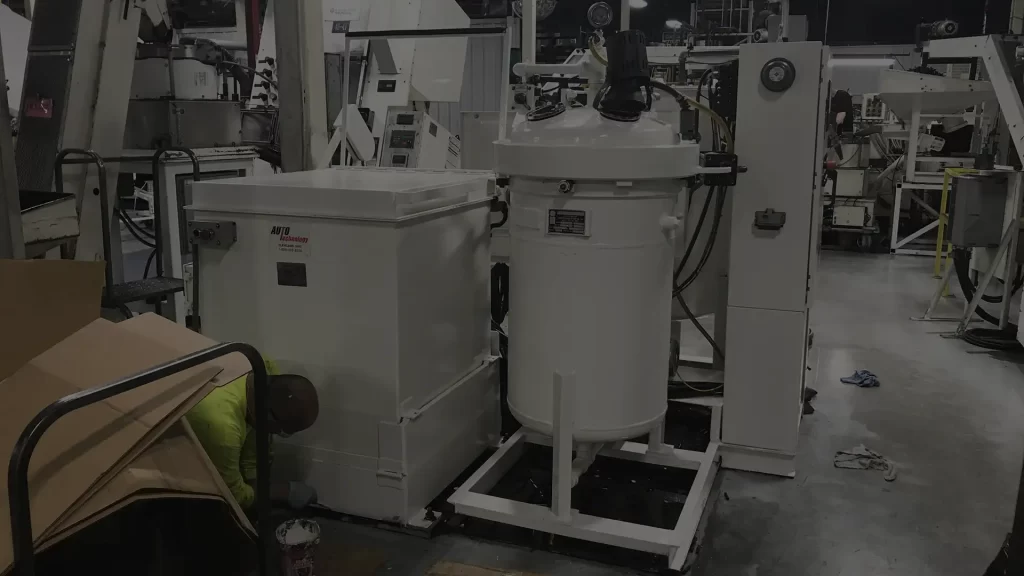
Painting equipment and machinery is a different job from painting the building around it. The surfaces are more contaminated, there is far more that must not be painted, and the finished coating has to survive heat, vibration, chemicals and contact.
Cleaning comes first
Equipment and machinery usually require deep cleaning and washing before any coating is considered. Grease, process residue and dust are precisely the things that stop paint bonding, and any of them left in place becomes a failure point later. On machinery that cannot be stripped down, dry ice blasting is often how that cleaning gets done without introducing water or leaving residue behind.
Masking is most of the work
We follow cleaning with a precise covering of everything that is not to be painted. On a machine that means guards, seals, bearings, sensors, hydraulic fittings, nameplates, guarding and controls. This stage takes longer than the painting itself on most jobs, and getting it wrong is the difference between a coated machine and a damaged one.
Why epoxy
Our equipment painting is generally done with epoxy paint because of its hardness and chemical durability. Machinery takes contact and exposure that an ordinary finish will not survive, and an epoxy system holds up where a decorative coating would be failing within a season.
Planning with your team
Our professionally trained and certified industrial equipment painters work with your people to minimize costly plant downtime. We listen, we agree a plan, both sides make informed decisions, and the expectations set at the start are the ones met at the end.
The outcome is a plant that looks well kept and, more importantly, equipment that is protected and safe to work around.
Read more about equipment and machinery painting, or get a quote.