When a painting contractor quotes an industrial job, most of the conversation is about surfaces, colors and timing. The part that decides whether the project is a problem is what happens before any of that: how the crew is trained, inducted and certified.
Training happens every week, not once
All of our project managers and production crew attend weekly training sessions on safety and proper working procedures. The frequency is the point. A crew briefed annually is a crew relying on memory; a crew briefed weekly is a crew for whom the current procedure is the recent one.
Ask a contractor how often their people are trained and what the most recent session covered. The specificity of the answer tells you whether it happens.
Induction to your procedures, not just theirs
Before starting work at any location, our site manager and production staff go through the client’s own safety and security procedures. This matters because a contractor’s generic safety policy does not know about your lockout requirements, your restricted areas, your allergen controls or your evacuation routes.
A crew that walks on site and starts working without that conversation is a crew that will eventually do something reasonable by their standards and unacceptable by yours.
You should be able to identify everyone
Our employees wear hard hats, steel-toe boots, yellow safety vests and Recoveron ID. That is partly protective equipment and partly a security measure: in a large facility, anyone should be able to tell at a glance who belongs on site and who to ask about.
Lift certification is a program, not a claim
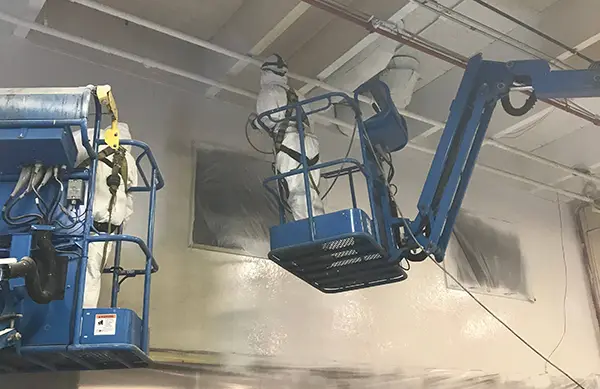
Any employee using aerial or scissor lift devices goes through a required training program covering:
- The different lift device types and their limits
- Pre-start inspections
- Proper safety equipment
- Safety procedures and OSHA standards
- Fall protection
The part that gets skipped elsewhere is the last step: operators must demonstrate they can properly use the specific lift they are asked to operate. Familiarity with one machine is not competence on another.
Pre and post inspection
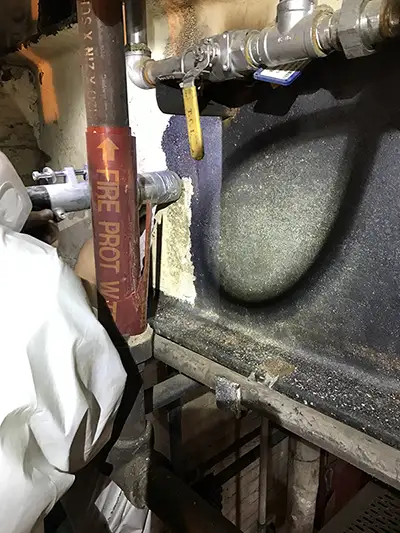
We start with a pre-inspection to determine the right preparation and application, and finish with a post-inspection to confirm the work. Both are documented, and those documents can be used as evidence of scheduled painting to auditors.
If your facility is audited, ask for this by default from any contractor. It costs them nothing to provide and it is worth a great deal to you.
What to ask for in writing
- Lift certification records for the people who will be on your site
- Confirmation that the crew will be inducted to your procedures before work starts
- The pre-inspection, before the schedule is fixed
- The post-inspection, before the final invoice
A contractor who has these ready will send them the same day.
Read about industrial interior painting, learn more about our team, or get a quote.