When a quote for equipment painting comes back higher than expected, the assumption is usually that the paint is expensive. It rarely is. The hours are in the masking, and on most machines that is the majority of the job.
What must never be coated
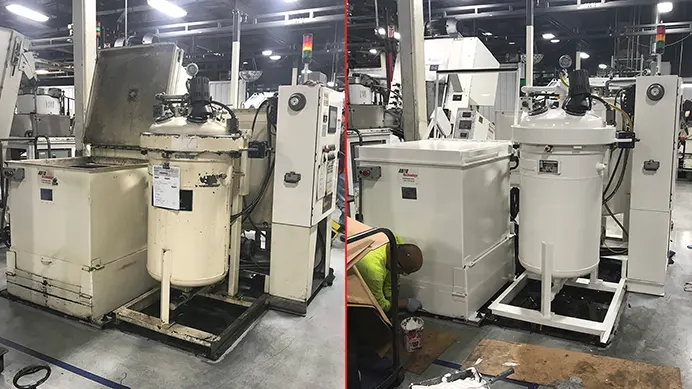
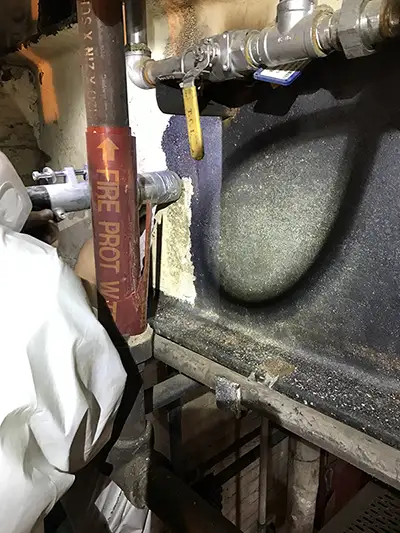
Equipment and machinery require deep cleaning and washing first, and we follow that with a precise covering of every item not to be painted. On a production machine that list is long:
- Seals and bearings. Paint bridges the gap and then cracks, or interferes with the seal entirely.
- Sensors and photo eyes. A coated sensor is a stopped line.
- Hydraulic and pneumatic fittings. Coating on a threaded fitting means it will not come apart cleanly at the next service.
- Guards and moving interfaces. Paint changes clearances.
- Nameplates, rating plates and warning labels. Frequently a compliance requirement, and impossible to replace once obscured.
- Controls, buttons and displays.
- Machined and contact surfaces. Anywhere the finish is functional rather than protective.
Why it takes so long
Masking is slow because it is detailed and because getting it wrong is expensive. Spraying a large surface is fast. Working around a machine deciding what gets covered, then covering it properly so it survives the air pressure of the spray, is not.
It is also the stage that cannot be recovered from. Overspray on a sensor or a seal means stripping, cleaning and possibly replacing a part, on a machine that is supposed to be back in production.
Why we use epoxy, and why that raises the stakes
Our equipment painting is generally done with epoxy because of its hardness and chemical durability, which is exactly what machinery needs. That same hardness is what makes overspray difficult to remove. A coating chosen to resist chemicals and abrasion does not come off a sensor housing easily.
What a scope should say
A good equipment painting scope names exclusions as clearly as inclusions. It should list what is being masked, and it should be agreed by walking the machine with someone who knows it, because the operator or maintenance technician will point out things the painting crew cannot know.
That walk-round is also where you catch the items that should be removed rather than masked, which is often faster and always safer.
What to take from this
If you are comparing equipment painting quotes, ask each bidder how they will handle masking and who will walk the machine with them. A quote that prices only preparation and application has either missed the work or is planning to do it quickly.
Read about equipment and machinery painting and equipment cleaning, or get a quote.