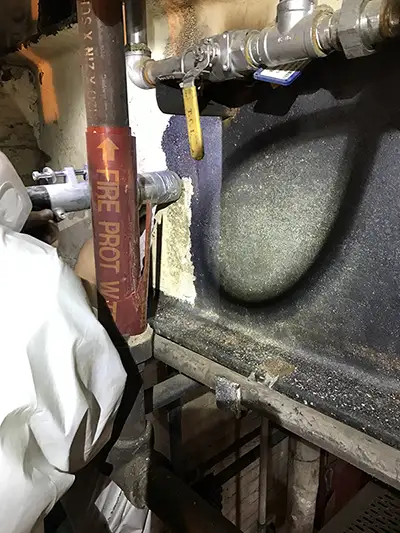

Every coating failure has a cause, and more often than not the cause was decided before a drop of paint was applied. Surface preparation is the part of a painting project that determines whether the coating lasts, and the central decision is how aggressive to be.
From most abrasive to least
We work through a range of methods, and the aim is always to use the least abrasive one that will actually do the job:
- Needle gun. Needles impact the substrate to remove rust, mill scale and old paint from metal. The most aggressive option we use, and the right one for heavy corrosion.
- Rotary scaling. A powerful electric machine that cleans, keys and prepares interior and exterior walls for refurbishment.
- Dry ice blasting. Non-abrasive and residue-free, for surfaces that need cleaning rather than profiling.
- Pressure washing. For contamination that water under pressure will release.
- Wet washing. Water and cleaning solutions, for lighter soils and more sensitive surfaces.
- Hand cleaning. The least abrasive, and the right answer more often than people expect.
Why more aggressive is not better
Over-preparing a surface costs money twice. It removes sound material that did not need removing, and on thin or older substrates it can leave a profile that the specified coating was never designed to sit on. The goal is a clean, sound, correctly keyed surface, not the maximum amount of material removed.
Deciding on site
Which method fits depends on the substrate, the existing coating, the environment the surface lives in and what is going on top. That judgment is made during the pre-inspection, before anything is scheduled.
Read more about our surface preparation services, or see industrial painting.