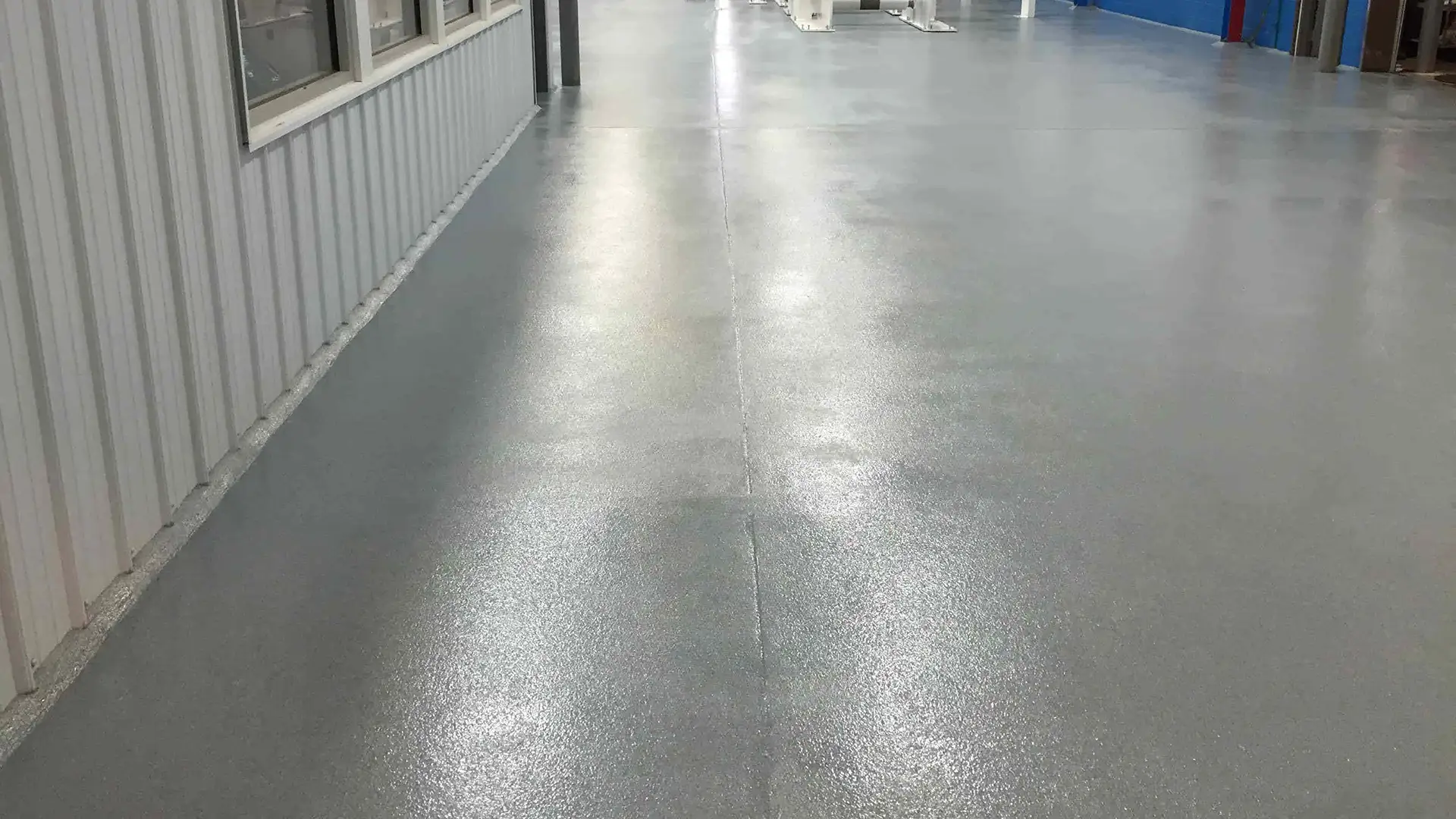
Every surface in a plant can be worked on while the building operates, with one exception. You can contain a wall, cover a machine and work overhead above a running line. You cannot work on a floor that people and vehicles need to be standing on.
That single constraint is why floor projects get deferred for years, and why planning them properly is most of the job.
Zone the building
The workable approach is almost always to divide the floor into sections and take them out of service one at a time, rather than treating the whole area as one project. Zoning lets the operation keep functioning at reduced capacity instead of stopping.
The zones should follow how the building actually works. Aisles that are the only route to a dock cannot be done at the same time as the dock. Areas serving a single line can often be done during that line’s own downtime.
Cure times set the calendar
This is the part that surprises people. Application is fast; return to service is not. A coated floor typically takes foot traffic before it takes vehicle traffic, and the interval between those two is often the longest single item in the schedule.
Ask for both numbers before the plan is fixed: when can people walk on it, and when can a loaded forklift drive on it. Both move with temperature and humidity, so a cold or damp week extends them.
Prepare first, and properly
A coating only lasts as long as the slab preparation underneath it. That means grinding, shot blasting or acid etching to create a surface the coating can grip, then cleaning, then priming. A floor coating laid over an unprepared slab delaminates at the traffic lines first, which is exactly where you will notice it.
Building this into the schedule properly is what stops a floor project needing to be done twice.
Sequence coating before striping
This sounds obvious and gets missed. If a floor is being coated and also needs safety striping, the coating goes down first and the striping goes on top. Doing it the other way means striping the floor, coating over it, and striping again.
Planning the two together means the floor comes out of service once instead of twice, which is usually a bigger saving than anything on the material line.
Weekends and shutdowns
Where zoning is not possible, weekend and shutdown windows can carry a floor project in stages. Each session has to end at a point where the area is safe and usable on the next working day, which means planning the zones around what can be completed and cured within the window.
Read about industrial floor care, epoxy floor coatings and safety striping, or ask us to plan the zones.