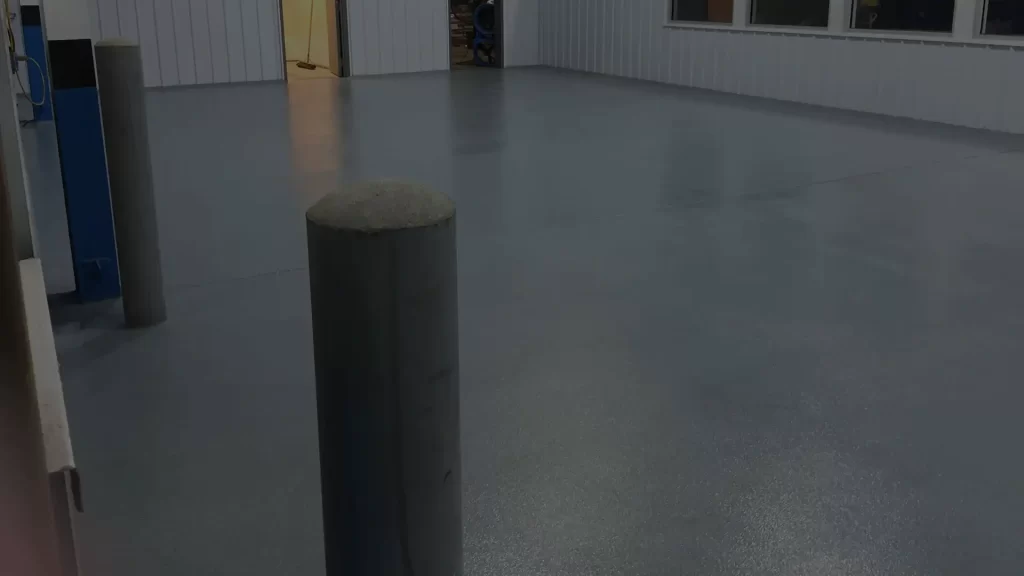
Epoxy floor coatings give you the color range of paint with the durability of a far more substantial material. In an industrial building that combination is the point: the floor has to survive foot traffic, forklifts, vehicles and the constant wear of tools, machinery and equipment, and still look like somebody is looking after it.
What epoxy actually is
Epoxy has become a generic term for many types of resin flooring system, which makes the word less useful than it looks. Strictly, epoxy is the fully cured result of two components or resins that have been mixed. It has been used for many years and is known for its adhesive qualities.
In flooring it turns up in three roles: crack repair, primer systems, and final top coats for floors and surfaces. It can be clear or come in a very wide range of colors.
How the layers work
Epoxies are often used as the bond coat beneath subsequent top coats, either of similar material or of something with higher abrasion and chemical resistance such as polyurethane or polyaspartic coatings. So the epoxy is frequently not the layer you walk on; it is the layer that holds the system to the slab.
Primer coats can be solids-based or water-based. For thicker applications a 100 percent solids epoxy is usually the suitable choice.
Specifying for the room, not the building
Different areas of the same facility often need different systems. A production area exposed to chemicals, a warehouse aisle carrying forklift traffic and an office corridor are three different problems. Matching the system to each area is what makes the floor last.
Read more about epoxy floor coatings, or get a quote for your floors.


