
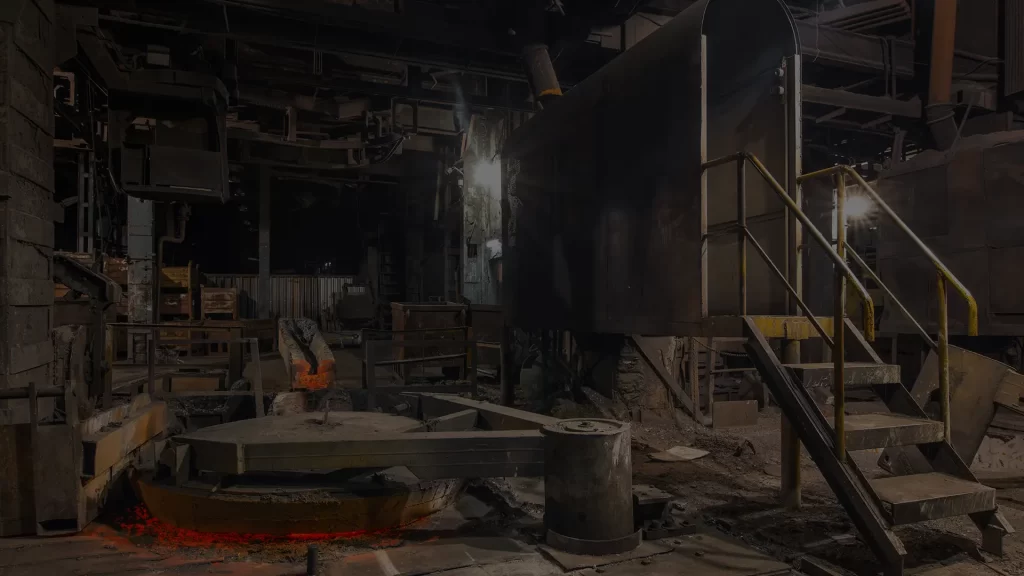
Cleaning a foundry is challenging because of the range of materials involved. Metal shavings, sand, oil and other contaminants accumulate on surfaces and equipment, and they do not all come off the same way.
The sequence
The process varies with the type of foundry and the materials used, but it generally moves through the same stages in the same order:
- Preparation. Shutting down equipment and covering machinery to protect it from cleaning materials.
- Sweeping and scraping. Brooms, shovels and other tools to remove loose debris and slag from surfaces.
- Power washing. High-pressure water to remove dirt, oil and other contaminants, including hardened slag that sweeping and scraping will not shift.
- Chemical cleaning. Specialized solutions for stubborn stains and contaminants, with the solution chosen for what is actually on the surface.
Why the order is not optional
Each stage is there to make the next one work. Power washing a surface still covered in loose sand turns it into slurry that has to be cleaned up separately. Applying chemicals to a surface with oil still on it wastes the chemical. Skipping the preparation stage means the cleaning materials end up inside equipment that nobody covered.
Protecting the equipment
The preparation stage is the one most often rushed and the one that causes the most expensive mistakes. Foundry equipment is not forgiving about water and chemicals reaching places they were not meant to reach, and the time spent covering machinery properly is always less than the time spent dealing with the consequences of not doing so.
Read more about foundry cleaning services, or get a quote.


