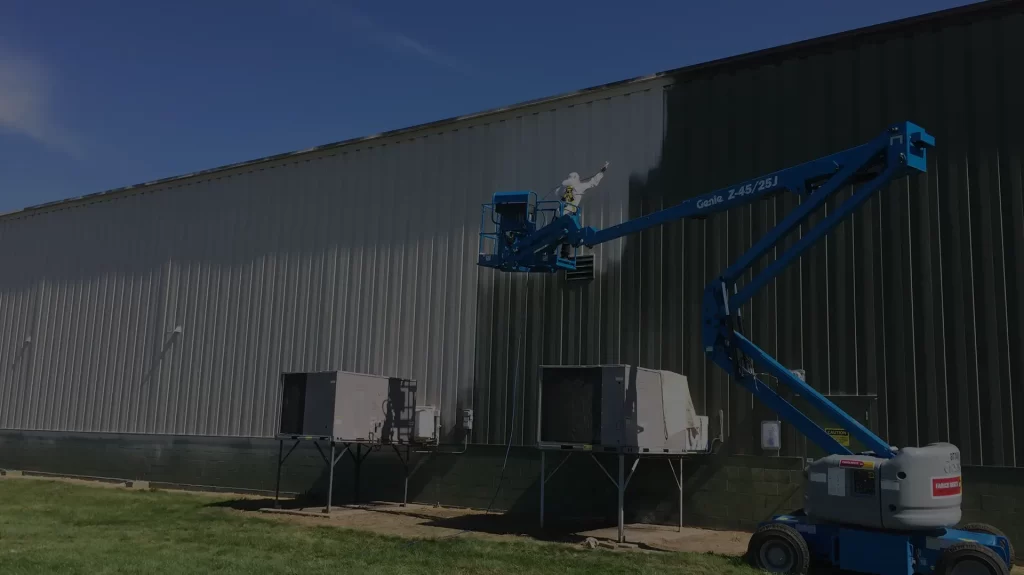
Industrial painting frequently has to happen during shutdowns or maintenance periods, because that is the only way to keep disruption manageable. That makes the calendar, not the paint, the hardest part of the job to get right.
Why a coating needs a window
Application is the quick part. What takes time is everything around it. The surface has to be cleaned and prepared. Everything not being coated has to be masked. Each coat needs to cure before the next goes on, and the whole system needs to cure before the area goes back into service. Rush any of those and you get a coating that fails early, which means doing it again during a shutdown you have not scheduled yet.
Cure time is the real constraint
When people plan a painting shutdown they usually budget for the spraying. The recoat interval between layers and the final cure before return to service are what actually set the length of the window. Those intervals move with temperature and humidity, so a cold or damp week extends them.
This is worth agreeing explicitly before the shutdown is booked. The question to ask is not “how long will it take to paint” but “when can we run product through here again”.
What can be done while production runs
Not everything has to wait for the shutdown, and a good plan front-loads whatever does not:
- Pre-inspection and specification, done weeks ahead
- Cleaning and surface preparation in areas that can be isolated with containment
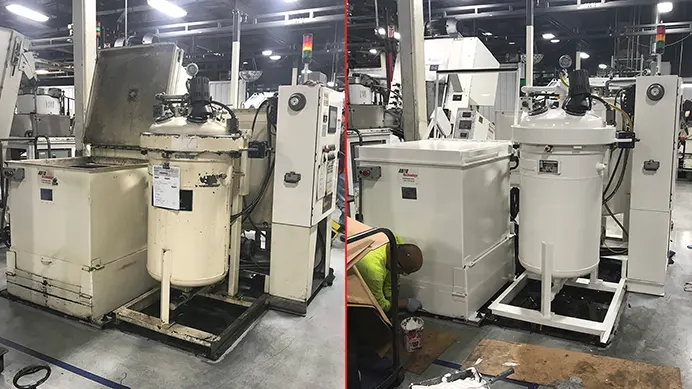
- Masking, which on equipment work takes longer than the painting itself
- Areas that are naturally separated from production, such as offices, corridors and support spaces
Done properly, the shutdown itself is only used for the work that genuinely needs the plant stopped.
Sequencing so no day is wasted
Cleaning, preparation and coating are three trades in sequence, and each one gates the next. The sequence that works is to clean, prepare, prime and topcoat area by area rather than doing each stage across the whole building. That way the first area is curing while the next is being prepared, and the crew is never waiting.
Where one contractor handles the cleaning and the painting, this gets considerably easier, because there is no handover to negotiate between the crew that prepared the surface and the crew that has to coat it.
Weekends and holidays
Where a full shutdown is not available, weekend and holiday windows can carry a project in stages. It takes longer overall and needs a plan that survives being interrupted, with each session ending at a point where the area is safe and usable on Monday.
Before you book the window
Settle four things: the areas in scope, the preparation standard, the cure times for the specified system, and who decides if weather pushes the schedule. Projects that overrun almost always left one of those open.
Read about interior painting and equipment painting, or talk to us about your shutdown calendar.