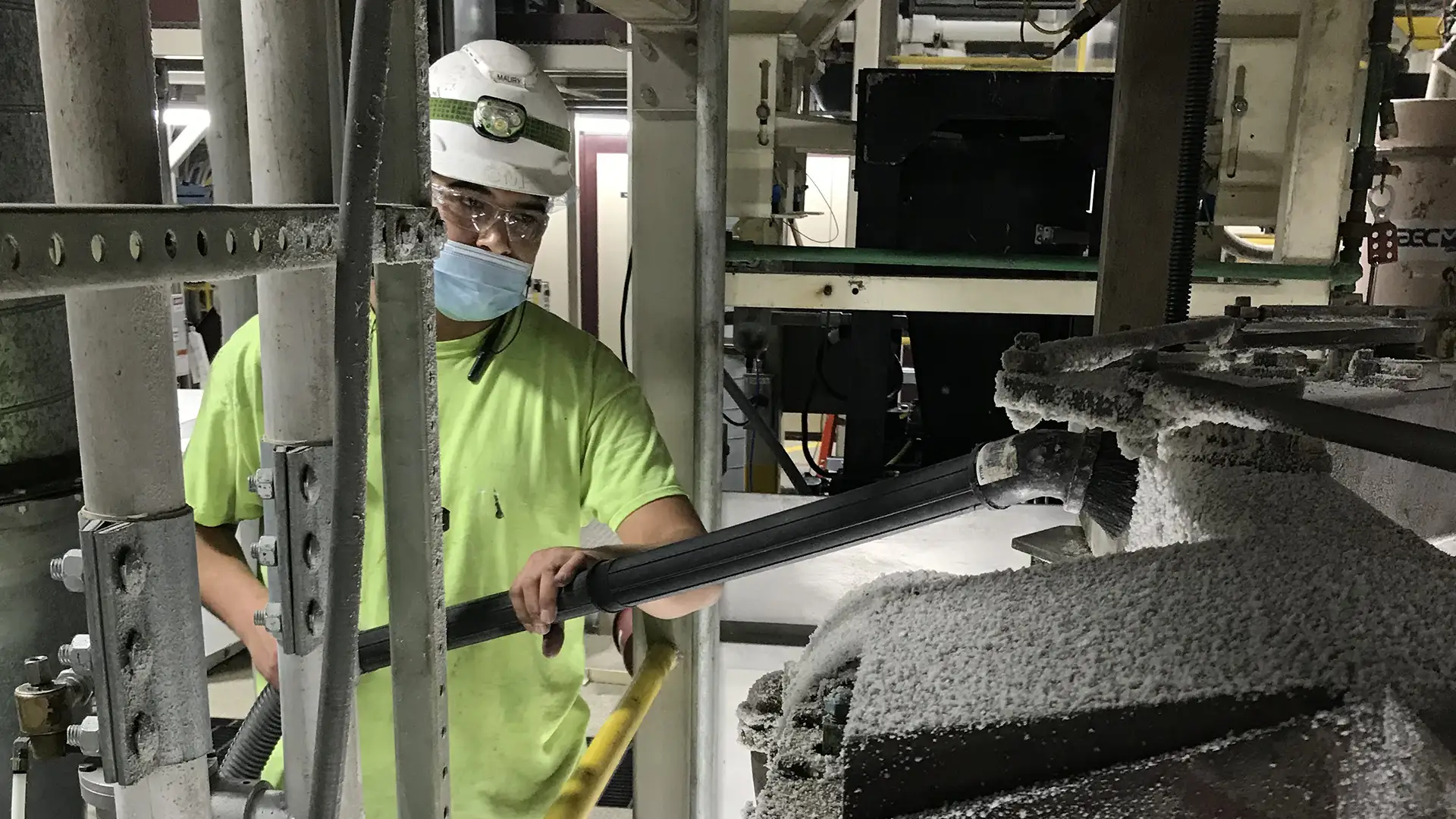
In most plants, cleaning sits in one budget and maintenance sits in another. On production equipment that division does not survive contact with reality, because the buildup that cleaning removes is the same buildup that causes the failures maintenance is paying for.
What buildup actually does
Dirt, grease and grime on equipment surfaces are not cosmetic. They:
- Trap heat. A coated motor or drive runs hotter than it was designed to, and heat shortens the life of everything around it.
- Accelerate wear. Abrasive dust works into moving parts.
- Hide developing faults. A leak, a crack or a worn seal on a clean machine is visible on a walk-round. On a dirty machine it is invisible until it fails.
- Cause corrosion. Built-up grease and process residue hold moisture against the surface.
That last point is why a cleaning schedule is really a reliability measure.
Set the interval from the process, not the calendar
Quarterly is not an answer, it is a habit. The right interval comes from how fast your specific process deposits soil on the specific equipment, and it varies enormously across one building. A packaging line handling dry product and a mixer handling oils need different frequencies.
A practical way to find it: clean an area properly, then inspect it at intervals until the buildup reaches the point where it is starting to matter. That period, minus a margin, is your interval.
Tie it into planned maintenance
Cleaning is easiest and cheapest when the equipment is already stopped for something else. Aligning it with planned maintenance windows means you are not buying downtime twice, and it puts the machine in front of a technician in a state where they can actually inspect it.
Where the equipment cannot be stopped, cleaning in place is what makes the schedule possible at all. Dry ice blasting cleans machinery where it stands, without water, residue or teardown.
Choose the method per machine
One method across a plant is a false simplification. Dry ice blasting where equipment cannot be dismantled or wetted. Hand cleaning and wipe-downs on complex assemblies, control gear and anything near product. Sanitation as a separate step where the equipment handles food.
Record it
Keep a record of what was cleaned, when, and by what method. It closes the loop with maintenance, it shows whether the interval is right, and in an audited facility it is evidence of a program rather than an intention.
Read about equipment and machinery cleaning and manufacturing plant services, or ask us to set an interval.