Plenty of facilities discover this the expensive way. A janitorial contractor who does a good job on offices is asked to take on the plant, and within a few months it is clear the arrangement is not working. The work is slow, the results are thin, and nobody can say exactly why.
The reason is simple. Industrial cleaning is a different trade. Using office cleaning solutions and tools in an industrial setting does not work out well, and it is time-consuming for insufficient results. Understanding that difference is the single biggest thing that separates contractors in this market.
Five things an industrial contractor has
These are the gaps that show up on real sites, and none of them are about working harder.
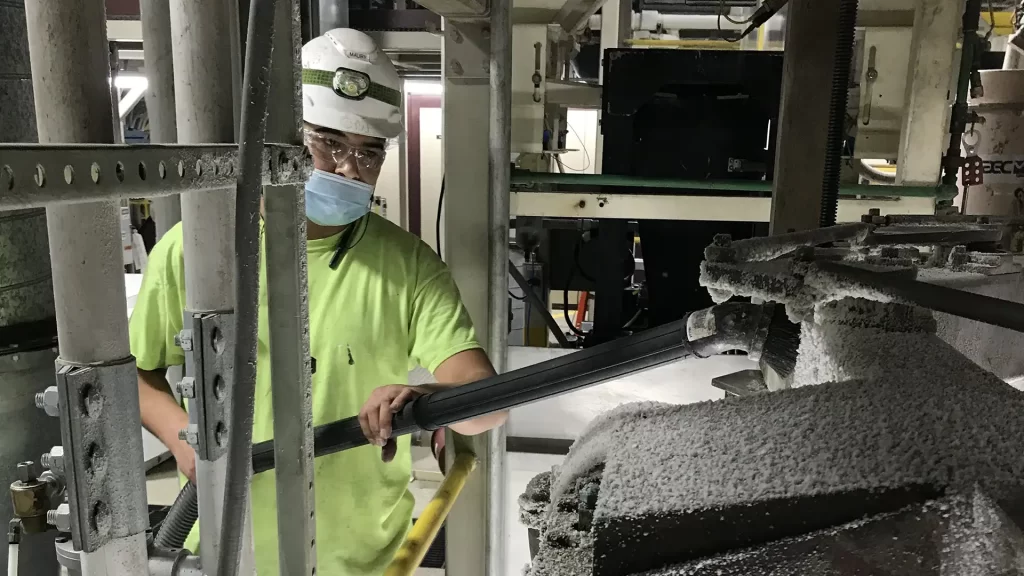
- Equipment built for the scale. Industrial pneumatic vacuums with HEPA filtration, pressurized water blasting machines, dry ice blasting units. A commercial outfit brings a wet vac and a mop bucket.
- Certification to work at height. Most of the soil that matters in a plant is overhead, on beams, ductwork, pipe runs and light fittings. Reaching it needs lift-certified technicians and the access equipment to match.
- Audit and GMP training. In a food or packaging plant, the cleaning contractor is part of what an auditor assesses. Training through GFSI-recognized programs and knowing Good Manufacturing Practices is not optional.
- Containment. Cleaning one part of a live plant without contaminating the rest of it is a discipline in itself: curtains, negative air draw, protecting equipment below the work.
- Scheduling around production. Working shutdowns, weekends and holiday windows, and knowing how to sequence so the line comes back up on time.
What goes wrong with the wrong contractor
The failures follow a pattern. Overhead areas never get touched, because nobody on the crew is certified to go up there, so dust keeps accumulating on the steel. Equipment gets cleaned with whatever chemical is on the van, and seals or finishes are damaged. A pressure washer is used at full pressure on a surface that could not take it. Work gets done during production because nobody planned a window, and the plant loses more in disruption than the cleaning cost.
The most serious version is an audit finding. If your sanitation contractor cannot evidence their training, that becomes your problem on the day an auditor arrives unannounced.
How to tell the difference when you are getting quotes
Ask these four questions and the answers will sort the field quickly:
- Which of your technicians are lift certified, and can you show me?
- What would you do differently in my type of facility compared with the last one you worked in?
- How would you clean the overhead steel, and how would you protect what is underneath it?
- What documentation do I get afterwards, and would it satisfy an auditor?
A contractor who has done this work will answer all four without hesitating. One who has not will talk about how thorough their team is.
Where to start
If you are not sure which type of contractor your facility actually needs, the honest answer is that it depends on what is in the building and what standard you are held to. We will walk the site and tell you.
See our industrial cleaning services, browse the industries we work in, or tell us about your facility.


