
Most people asking for an industrial clean know what the problem looks like but not what to ask for. That is reasonable. The method names are trade jargon, and the differences between them only matter once you know the constraints.
Here is how we actually decide, and you can work through it yourself before anyone quotes.
Start with three questions
- What is the surface? Painted steel, bare concrete, food contact stainless, masonry, delicate control gear.
- What is the soil? Dry dust, grease, process residue, rust and mill scale, biological soil.
- What is the constraint? Downtime, water, residue near product, access, or the substrate itself.
The constraint usually decides it. The other two narrow the choice.
Dry ice blasting
Pick it when equipment cannot be dismantled, moved or wetted. The pellets turn to gas on impact, so there is no blasting media to recover, which is what makes cleaning in place possible. It is non-abrasive, non-conductive and non-toxic, so it suits machinery, control gear and surfaces you do not want reprofiled. It is the answer when downtime, not the cleaning, is the real cost.
Pressure washing and wet washing
Pick it when the substrate can take water and pressure, and the soil is heavy. Pressure washing moves fastest on hard surfaces and large areas. Wet cleaning with solutions handles soils that water alone will not lift. Both are ruled out near live electrics, around equipment that cannot get wet, and on substrates that will be damaged by the pressure.
Hand cleaning and wipe-downs
Pick it near product, on complex assemblies, and anywhere overspray or backsplash is unacceptable. It is slower per square foot and it is the only correct answer on a lot of food processing equipment. Wipe-downs are what you use on machinery that cannot get wet at all, degreasing sticky product residue off motors, conveyor belts, rollers and frames.
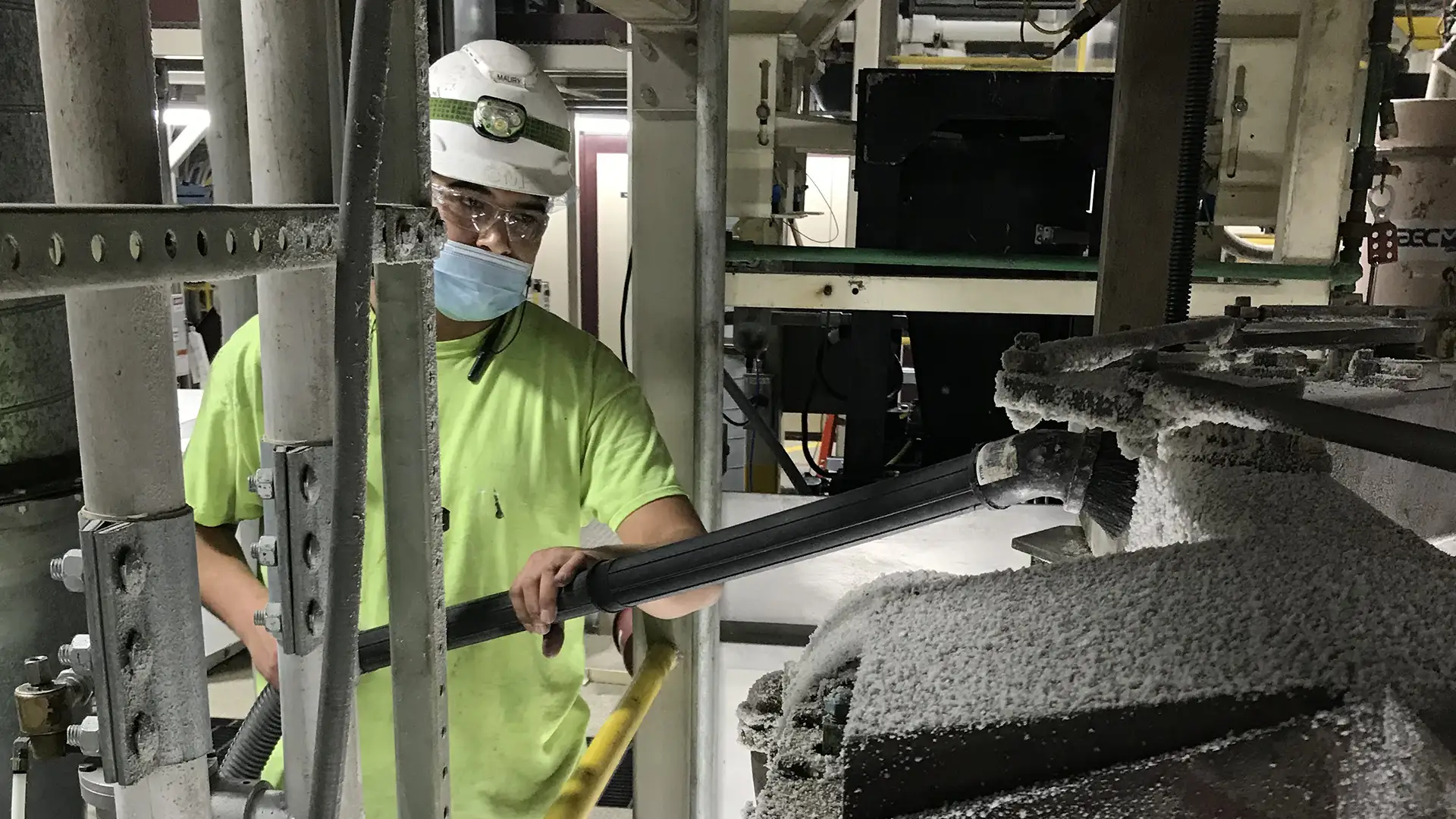
Pneumatic vacuuming
Pick it for dry dust, especially overhead. Industrial vacuums with HEPA filtration capture and contain the dust rather than relocating it, which matters because dust disturbed into the air is the version that causes both the respiratory problem and the explosion risk. This is the method for beams, ledges, ductwork and the tops of equipment.
Surface preparation is its own question
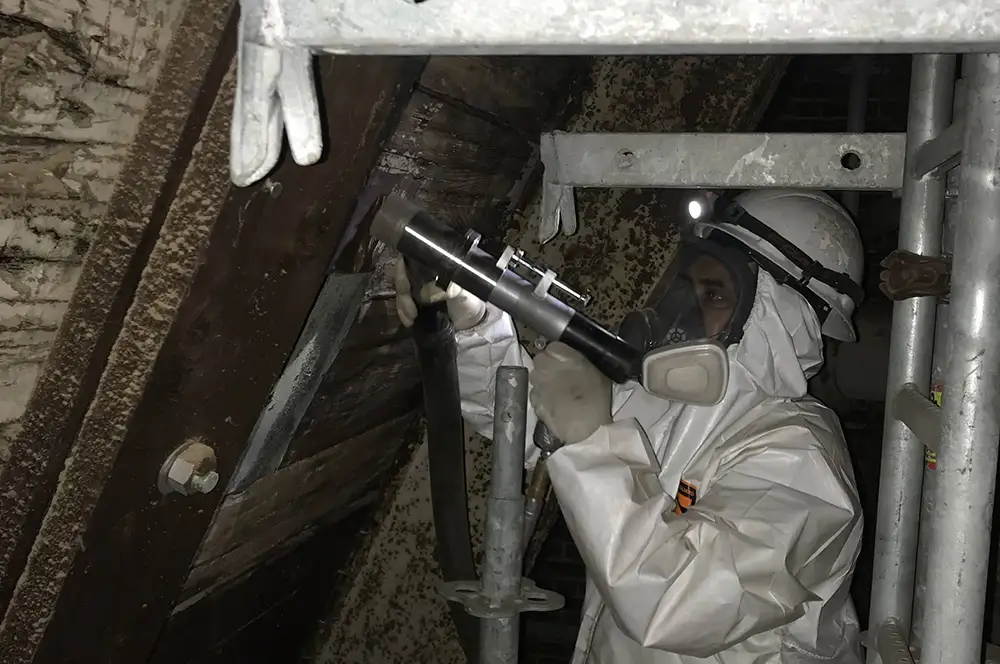
If the surface is about to be coated, you are not cleaning, you are preparing. That moves you onto a different scale, from needle guns and rotary scalers at the aggressive end down to hand cleaning at the other. The rule there is to use the least abrasive method that will actually do the job.
Most projects need two or three
A real deep clean rarely uses one method. A typical sequence is vacuum the dry dust first so it does not turn into slurry, then wet wash the hard surfaces, then hand clean and wipe down the equipment, then sanitize if the facility requires it. Getting that order wrong is what turns a two-day job into a four-day one.
If you are unsure, describe the surface, the soil and the constraint and we will tell you which method fits. Start with our industrial cleaning services or ask us to walk your facility.