
The question that stops most industrial cleaning projects is not price. It is disruption. Nobody wants to find out halfway through a shift that a crew has blocked an aisle or that a line cannot restart. So here is the whole sequence, start to finish.
1. The walk-through
Nothing useful can be quoted from a phone call. We walk the building with someone who knows it, look at the surfaces, the soil and the access, and ask what the constraints are. That visit is where the method gets chosen and where most of the cost is decided.
2. Agreeing the scope
The scope names what is being cleaned, what method is being used on each area, and just as importantly what is not included. Exclusions matter more than people expect. A scope that says “clean the production area” and one that says “clean the production area including overhead steel to 30 feet, excluding the inside of the ovens” are different jobs at different prices.
3. Site induction and safety
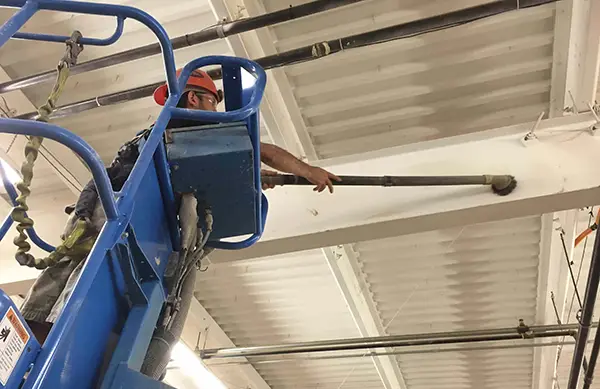
Before work starts, our site manager and crew go through your safety and security procedures, not just our own. Our people wear hard hats, steel-toe boots, high visibility vests and company ID. Anyone operating a lift has been through lift certification covering device types, pre-start inspections, safety equipment, OSHA standards and fall protection, and has demonstrated competence on the specific machine.
This is also the point where lockout requirements get agreed for any equipment we will be working on.
4. Containment
Containment is how one part of a live plant gets cleaned without contaminating the rest. Depending on the work that means curtains, sheeting over equipment below, negative air draw around dry ice blasting, and protection for electrical outlets, switches, lights, buttons and alarms.
It is also the stage that gets skipped by contractors trying to be cheap, and the reason those projects create more work than they finish.
5. The work, around your schedule
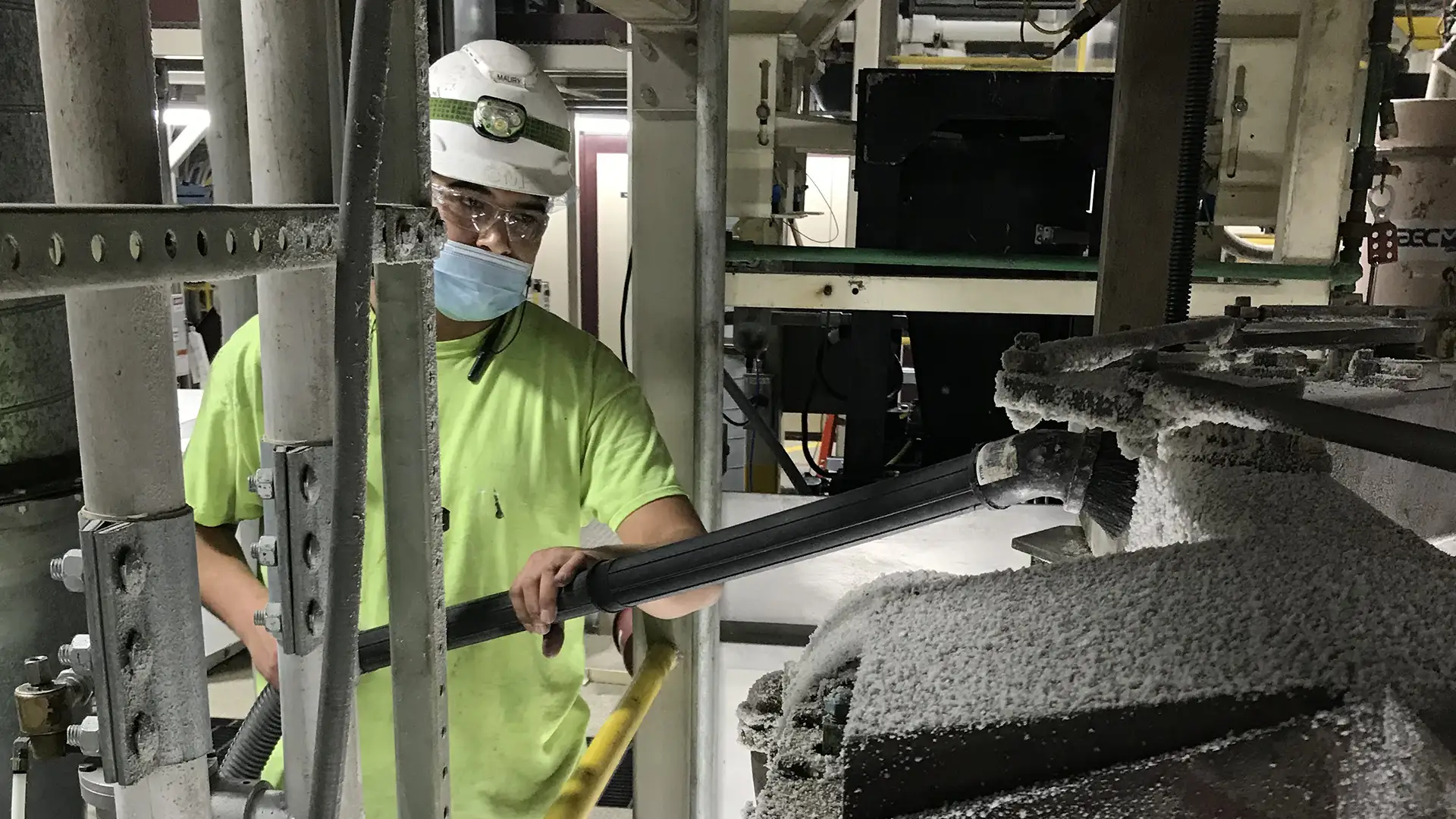
We plan around your operations, using scheduled downtime, weekends and holiday shutdowns so crews stay clear of production. On equipment, cleaning in place often removes the need to strip a line down at all. Where a facility runs continuously, the work gets zoned so one area is cleaned while the rest keeps producing.
6. Pre and post inspection
We document the condition before and after. That is partly so both sides agree the work is done, and partly because those documents are evidence of scheduled maintenance that you can put in front of an auditor.
If your facility is audited against SQF, BRCGS, FSSC 22000 or similar, this documentation is worth asking any contractor for by default.
7. Handover
At the end you get the area back clean, the equipment uncovered and checked, the waste removed, and the inspection record. If something is not right, it gets put right before the crew leaves the site.
What we need from you
A point of contact who can make decisions, the downtime window agreed in advance, access arrangements, and your safety requirements up front. Projects that go smoothly almost always had those four settled before day one.
Read about our industrial cleaning services, learn more about our team, or book a walk-through.