Overhead cleaning looks straightforward until you try to plan it. The surfaces are 20 or 30 feet up, there is production underneath, and whatever comes off the steel has to go somewhere other than onto the line. Here is how the work is actually sequenced.
Step 1: clear and cover
The first step is to clear the area of debris and cover any equipment or machinery to protect it from cleaning materials. This is the stage that gets rushed, and it is the one that causes the expensive mistakes. Anything left uncovered below the work area will receive whatever is dislodged above it.
In a food or packaging environment, this stage also decides whether the area needs to be taken out of production entirely or whether containment is sufficient.
Step 2: choose the access
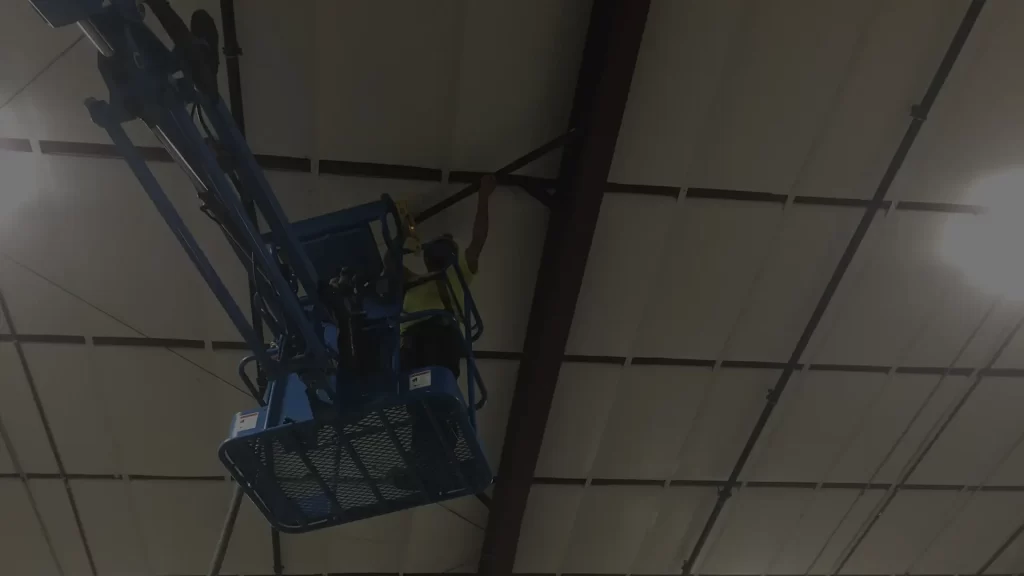
Reaching overhead surfaces means specialized equipment, usually scaffolding, cherry pickers or boom lifts. The choice depends on the height, the floor loading, how much clear space there is to maneuver, and whether the crew needs to move continuously along a run of steel or work from fixed positions.
Racking and stored product frequently decide this. A warehouse with full pallet racking has different access options from an open production hall.
Step 3: the cleaning pass
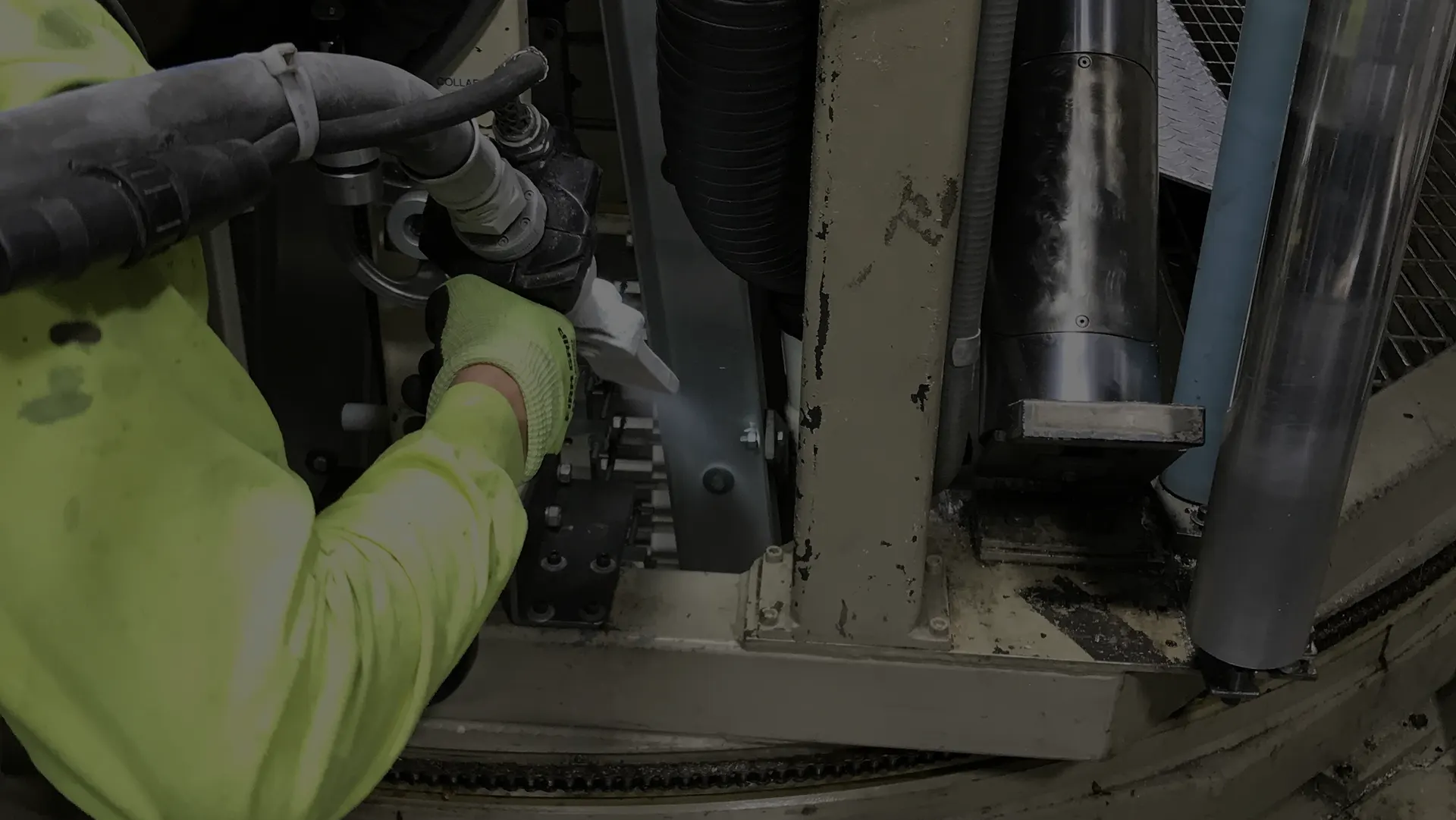
Surfaces are cleaned using pressure washing, vacuuming or scrubbing, and which one is used depends on three things: the facility type, the surface type and the level of soiling.
- Vacuuming for dry dust on beams, ledges, ductwork and light fittings. Industrial vacuums with HEPA filtration capture and contain rather than relocate, which is the whole point.
- Pressure washing where the surface can take it and the soil is heavy, with containment for the water.
- Scrubbing and hand cleaning where a surface is delicate or close enough to product that neither of the above is acceptable.
The cleaning products have to suit the specific surfaces. Using a general purpose chemical on galvanised steel or on a painted finish is how a cleaning job becomes a repainting job.
Step 4: safety throughout
Overhead cleaning in a working plant is genuinely dangerous, and all safety protocols apply for the whole duration, not just at the start. Personal protective equipment includes hard hats, goggles and respirators. Lift operators work to their certification. The area below stays controlled.
This is the reason the work should be done by experienced professionals with the proper equipment and knowledge of industry safety protocols, standards and regulations. It is not a job to give to whoever is available.
Step 5: the record
Because overhead areas are exactly what an auditor looks at, the work is worth documenting. Pre and post inspection records show the condition before and after and stand as evidence of scheduled cleaning.
We follow Good Manufacturing Practices so that the work supports the guidelines our clients are held to rather than creating a new problem for them to explain.
Read more about overhead cleaning and knockdowns, or ask about your ceilings.