Wet washing covers any industrial cleaning method that uses water and cleaning solutions to lift dirt, grime and other contaminants off equipment, machinery and structures. It is the most familiar family of methods in industrial cleaning, and the one where choosing the wrong variant costs the most time.
The methods under the heading
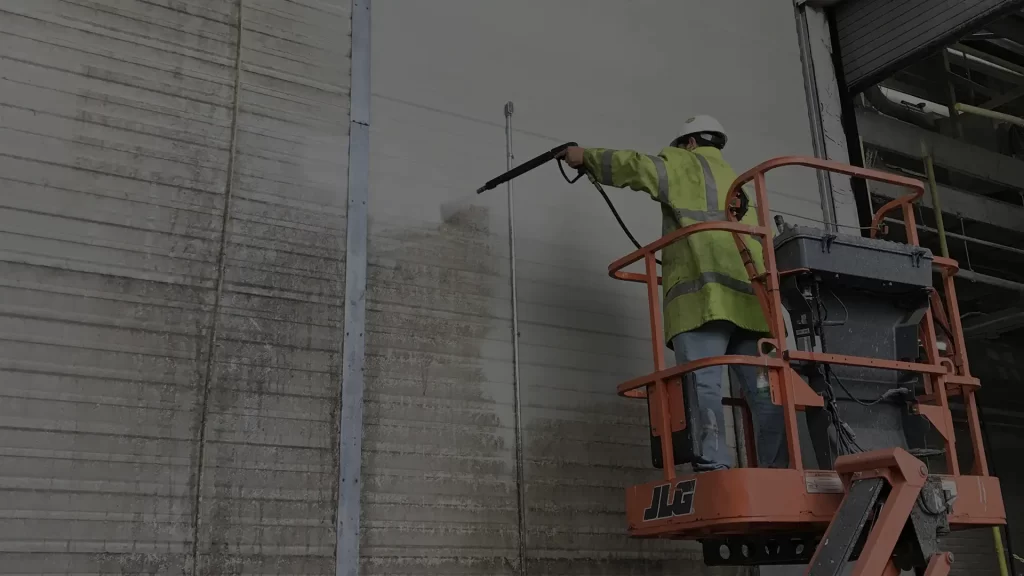
- Pressure washing. Water under pressure, for hard surfaces and heavy buildup where the substrate can take it.
- Wet cleaning. Cleaning solutions applied under controlled pressure, for soils that water alone will not release.
- Hand cleaning. For equipment that is delicate, complex, or close enough to product that overspray is unacceptable.
- Wipe down. A controlled final pass, often the step that makes the difference before an inspection.
- Sanitize. The separate step that follows cleaning, once the surface is clean enough for it to work.
Pressure is not the answer to everything
The instinct on a badly soiled surface is to turn the pressure up. On painted steel, on older masonry, on equipment with seals and bearings, that instinct causes damage that costs more to repair than the cleaning saved. Part of our pre-inspection is deciding how much pressure a surface can take and where hand cleaning has to take over.
Cleaning before sanitizing
Where sanitizing is part of the scope, the order is not negotiable. If soil or dust is present on a surface, the sanitation chemical cannot reach the area underneath it, so that area is not sanitized. Cleaning comes first, every time.
Read more about our wet washing services, or tell us what needs cleaning.