At the aggressive end of surface preparation sit two tools that do similar-sounding jobs in quite different ways. Knowing which one a specification calls for, and why, is the difference between a surface that is ready to coat and one that has been damaged getting there.
The needle gun
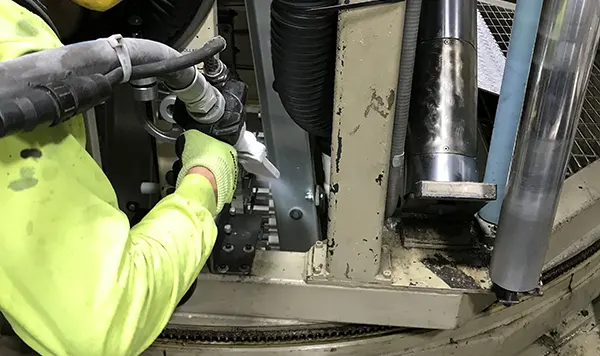
A needle gun works by driving a cluster of needles against the substrate, impacting it repeatedly to break off unwanted material. It is commonly used to remove rust, mill scale and old paint from metal surfaces.
What makes it useful is that the needles reach into irregular surfaces, corners, weld seams and pitted areas that a flat tool cannot follow. What makes it demanding is that it is genuinely aggressive. On heavy corrosion that is exactly right. On thin or sound material it removes more than it needs to.
Specify it for: heavy rust, mill scale on structural steel, failed coating that has to come off completely, and complex geometry where a flat abrasive cannot make contact.
The rotary scaler
A rotary scaler is a powerful electric machine that cleans, keys and prepares surfaces, and it is the better tool on broad flat areas. It prepares interior and exterior walls for refurbishment and steel or concrete floor surfaces for re-plastering, keying or sealant applications.
Its range is wider than most people expect:
- Cleaning brick
- Roughening surfaces
- Keying back internal walls and plaster
- Removing paint from floors
- Removing indoor and outdoor coatings
Specify it for: large flat areas, floors being prepared for a coating system, walls being prepared for refurbishment, and coating removal at scale.
Keying, not just cleaning
Both tools do something a wash cannot: they leave a profile. A coating needs something to grip, and on a smooth or sealed surface there is nothing for it to hold to. That is why preparation and cleaning are different operations, and why a surface that looks clean can still be unfit to coat.
Where they sit on the scale
These two are the most abrasive options we use. Below them, in descending order, are dry ice blasting, pressure washing, wet washing and wipe-downs, then pneumatic vacuuming and hand cleaning. The rule that governs the whole scale is to use the least abrasive method that will actually do the job, because anything more removes sound material you are then paying to replace.
Lead and older coatings
One caution worth stating plainly. If the coating being removed predates 1978, or the building does, settle the question of lead before any aggressive preparation starts. Both of these tools turn intact coating into airborne dust and chips, which is precisely the exposure route that makes lead a regulated hazard.
Read more about surface preparation and lead abatement, or ask which method your surface needs.