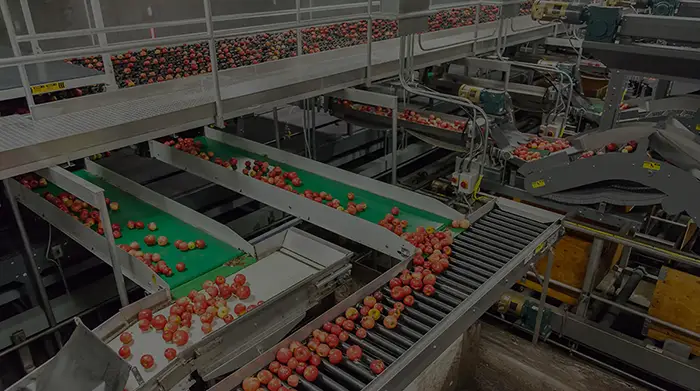
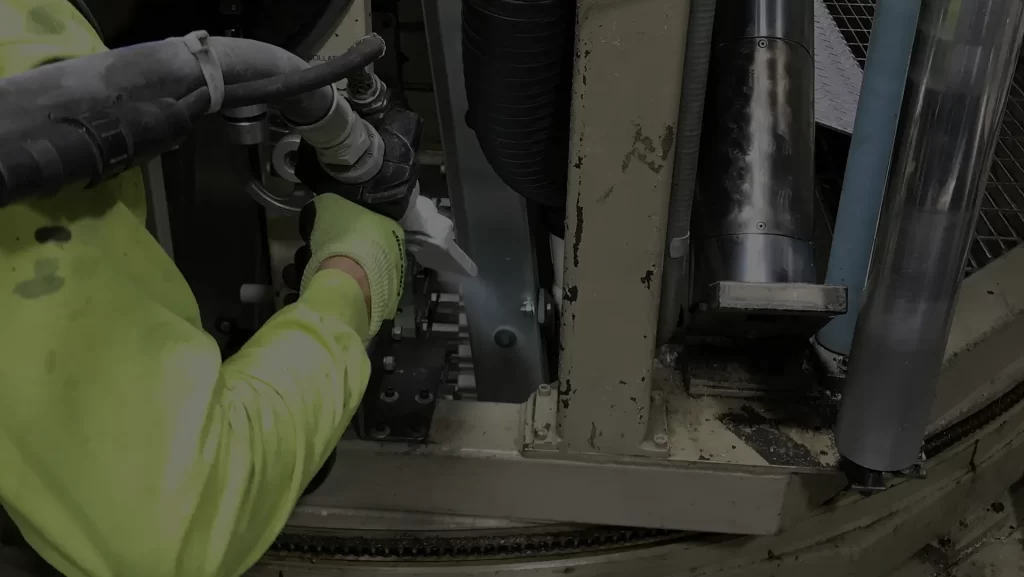
Dry ice blasting, also called CO2 blasting, is one of the few cleaning methods that lets us clean machinery where it stands. For a plant that loses money every hour a line is down, that single fact changes the economics of a cleaning project.
Similar to sand blasting, up to a point
The setup will look familiar if you have seen sand or soda blasting. A medium is accelerated in a pressurized air stream and driven against the surface being cleaned or prepared. That is where the similarity ends.
Instead of a hard, abrasive medium grinding against the surface, dry ice blasting uses soft dry ice pellets, which makes it completely non-abrasive. The pellets turn straight from solid to gas on impact, so nothing is left behind to sweep up, bag or dispose of. The only waste is the contaminant that came off the surface.
Where it earns its place
We use dry ice blasting on cinder block walls, concrete floors, machinery and equipment, and it is particularly useful where:
- Equipment cannot be dismantled or moved to be cleaned
- Secondary waste from a blasting medium would be a problem, for example near product
- The surface underneath must not be damaged or reprofiled
- Downtime is the real cost of the job
Cleaning in place
Cleaning in place is the part that matters most to a production schedule. Because there is no media to contain and recover, we can often work around equipment that stays where it is, which reduces both the teardown and the reassembly that a traditional clean would require.
Dry ice blasting is not the right answer for every surface, and part of our job is telling you when another method will do it better or cheaper. Learn more about our dry ice blasting services or ask us about your equipment.