Lead paint is usually discussed as a residential problem. It is not. Lead is commonly found in commercial buildings constructed before 1978, and a commercial property can carry a greater risk of exposure than a house, simply because of its larger size and higher occupancy.
Why it is treated so seriously
Lead paint exposure can cause lead poisoning, which is particularly dangerous for young children, pregnant women and people with certain medical conditions. In a commercial or industrial setting the exposure pathway is usually disturbance: renovation, demolition, surface preparation or anything else that turns intact paint into dust and chips.
That is worth stating plainly, because it is the reason abatement is not a job to hand to a general painting crew. The moment a surface is disturbed without the right controls, a contained problem becomes an airborne one.
Certified people, documented process
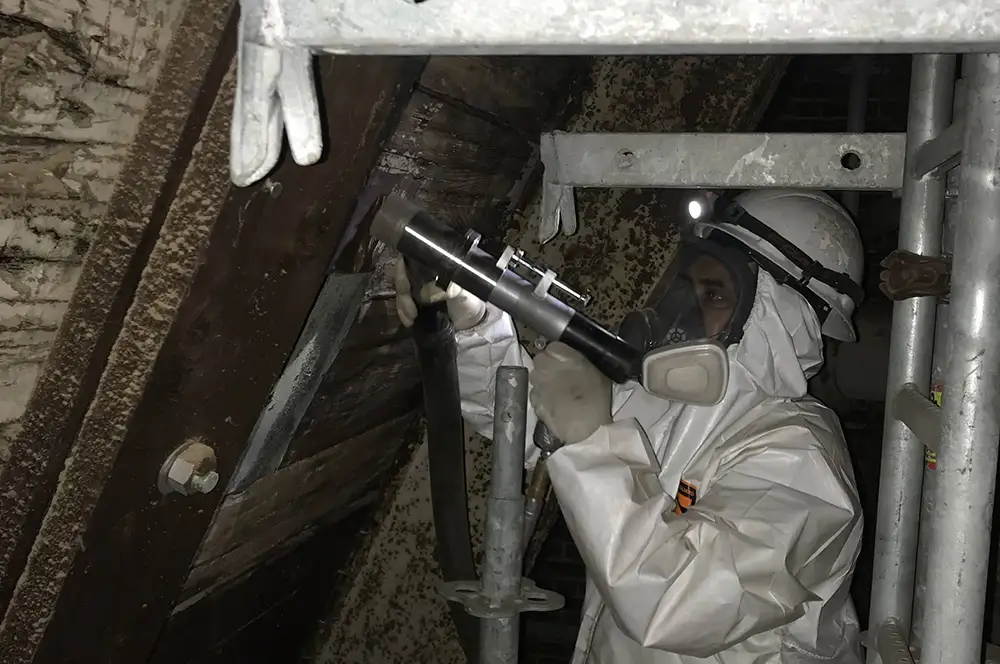
The lead abatement process in commercial properties follows similar guidelines to residential work. It is critical to use certified professionals trained in safe removal techniques who adhere to EPA and OSHA guidelines. That covers containment of the work area, controlled removal, personal protective equipment, and the handling and disposal of the waste that comes off the building.
Before you schedule other work
If a building predates 1978 and you are planning painting, renovation or surface preparation, lead is a question to settle before the schedule is set rather than after a crew has started. Finding it partway through a project stops everything.
Our lead abatement work is fully warrantied, quotes are free and fast, and we take calls around the clock.
Read more about our lead abatement services, or request a quote.